Laundry Hygiene Standards Australia: Wash Temperatures, Commercial vs Home (2026)
Laundry hygiene standards australia are mostly about matching water temperature, detergent and drying to how dirty the load is. Everyday clothes washed with detergent and dried thoroughly are fine for most households. Higher heat, longer cycles and commercial processes matter more for illness, heavily soiled workwear, hospitality linen and anything that must meet workplace or health-service expectations.
This guide separates home practice from commercial standards. Find laundromats and cleaners on our directory. Site cleanliness checklist: are laundromats clean. Business volume: commercial laundry service.
What “hygienically clean” means for households
Home laundry isn’t a hospital sterilisation process. The practical goal is to remove dirt, body soils and odour, and to reduce microbes to a level that’s safe for normal living. Detergent, mechanical action, time and heat all contribute. Incomplete drying is a common failure. Damp towels left in a basket grow mildew even after a hot wash.
Health advice for the public sits with state health departments and national agencies. For infection-control context in healthcare settings, see materials from the Australian Commission on Safety and Quality in Health Care. Household rules are simpler: wash sick-person linen separately when advised, use the hottest suitable cycle, and dry fully.
Wash temperatures that actually matter
| Load type | Typical approach | Notes |
|---|---|---|
| Everyday synthetics / mixed | 30–40°C with detergent | Energy-efficient; fine when clothes aren’t heavily soiled |
| Towels, sheets, underwear | 40–60°C where fabric allows | Higher heat helps on body soils; check care labels |
| Illness / vomiting / diarrhoea | Hottest suitable + separate load | Follow local health advice; dry on hot or in sun |
| Workwear with oils / mud | Pre-treat; hotter wash if label allows | Laundromat large washers help for bulky gear |
| Wool / silk / “dry clean only” | Don’t force 60°C at home | Use specialist clean or gentle process |
Modern detergents work well in cooler water for light soil. Heat still helps on grease, some stains and when someone in the house has been unwell. Fabric care labels override a generic temperature chart. A silk blouse ruined at 60°C isn’t a hygiene win.
Commercial vs home laundry
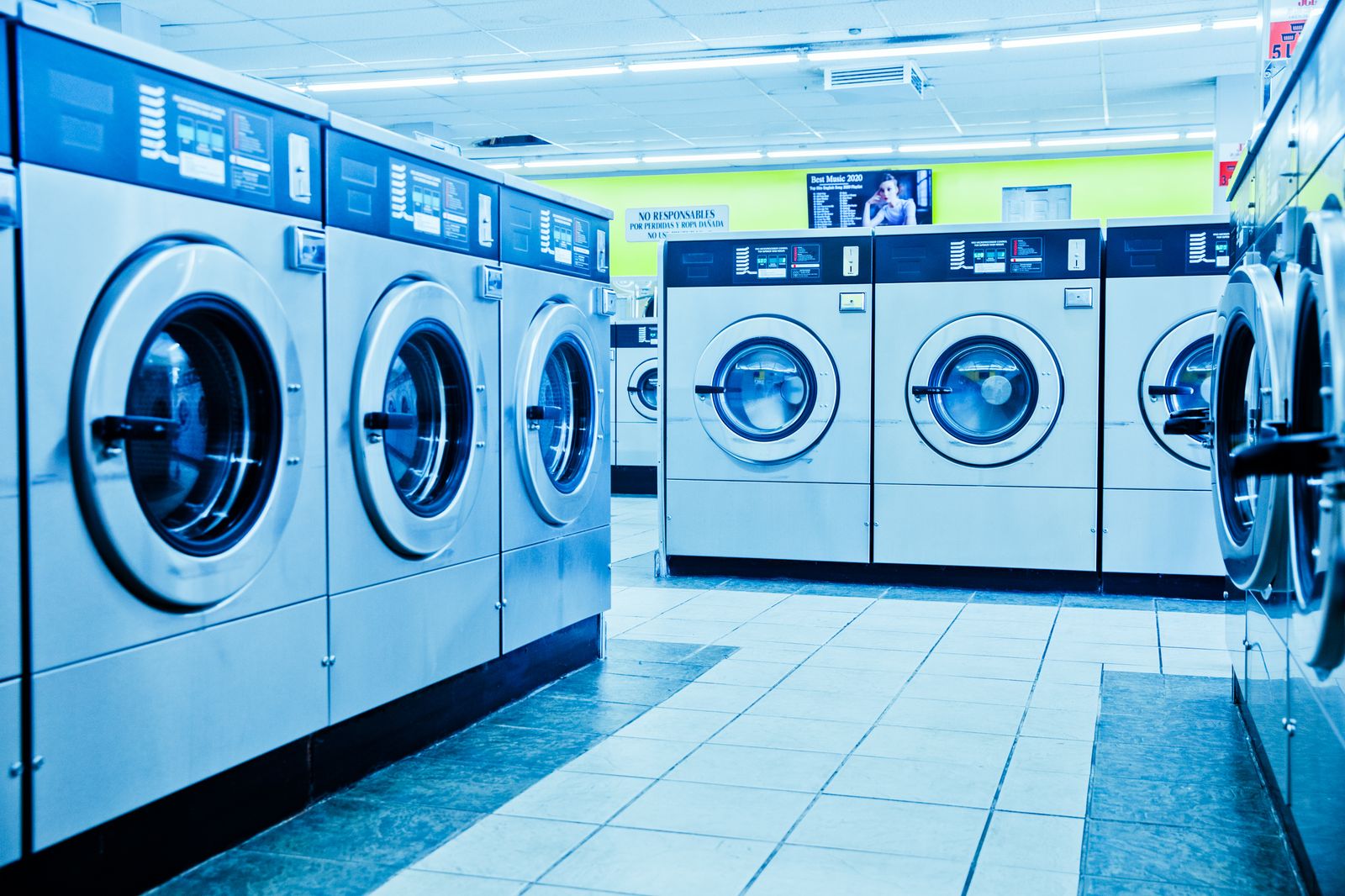
Commercial plants and many laundromat machines differ from a 7 kg apartment washer in three ways: capacity, programmable cycles and throughput discipline.
- Capacity: larger drums rinse soils more effectively when not overloaded
- Cycle control: commercial programs can hold temperature and time more consistently
- Process separation: hospitality and healthcare linen often use dirty/clean zoning that homes don’t need
For cafés, Airbnb hosts and salons, a scheduled commercial service reduces the risk of under-washed towels returning to customers. Overview: commercial laundry industry Australia and commercial laundry service Australia.
Self-serve laundromats sit in the middle. Bigger machines and hotter dryer options than many homes, but hygiene still depends on you choosing a clean drum and finishing the dry cycle. Walk-through tips: how to use a laundromat.
When professional cleaning helps hygiene (and when it does not)
Dry cleaning is chosen for fibre protection and oil-based stains, not because solvent makes everything “sterile.” Professional wet cleaning can combine controlled water chemistry with finishing equipment. Neither replaces separating heavily contaminated items that belong in clinical or specialist waste streams.
Use a dry cleaner when labels and structure demand it: dry cleaner near me, how dry cleaning works, wet vs dry cleaning.
Use a hot laundromat wash when you need volume and heat your home machine can’t deliver: doonas after illness, moving-day textiles, sports kits.
Practical hygiene checklist
- Don’t overload the drum; clothes need water and detergent contact.
- Dose detergent for soil level and water hardness in your area.
- Wash bathroom towels and kitchen cloths hotter / more often than jeans.
- Clean the washing-machine door seal and detergent drawer at home; wipe laundromat seals if residue is visible.
- Empty dryer lint traps; run until fully dry.
- Store clean linen in a dry cupboard, not a damp laundry corner.
Water efficiency labelling for household products is explained at Water Rating. Saving water is good practice. Don’t shorten cycles so far that detergents can’t rinse.
Public health, product safety and practical next steps
Laundry detergents and disinfectant additives are consumer products. Follow label directions. But more chemical isn’t always cleaner and can irritate skin. The ACCC regulates product safety and consumer guarantees on goods and services. If an “antibacterial” claim seems misleading, that’s a consumer-law issue as much as a hygiene one.
So industrial cleaning ingredients sit under AICIS for industrial use. Shoppers mainly need the care label and the detergent instructions. For shared machines, pick a maintained site and wipe the seal; heat and detergent still do the core hygiene work. See are laundromats clean. Browse all locations or laundromat near me when you need a large-capacity washer for bulky items.
Frequently Asked Questions
Is a 30°C wash hygienic enough?
For lightly soiled everyday clothes with a quality detergent, usually yes. Use hotter cycles for towels, illness linen and heavy soil when the fabric allows.
Do I need bleach every wash?
No. Overuse damages fibres and colours. Reserve oxygen or chlorine bleach for suitable whites and specific stains.
Are laundromat machines dirtier than home machines?
They handle more strangers’ loads, so pick a maintained site and wipe the seal. Heat and detergent still do the core hygiene work. See are laundromats clean.
Where can I wash bulky items near me?
Browse all locations or laundromat near me for large-capacity washers.
Related guides
- Are laundromats clean?
- How to use a laundromat
- Commercial laundry service Australia
- Dry cleaner near me
- Find laundromats by suburb
Sources: Australian Commission on Safety and Quality in Health Care · Water Rating · ACCC · AICIS
By Laundry Services Near Me Team · About · Find laundromats
Need a local listing?
Browse verified businesses in our directory or read more guides on the blog.
Find laundromats All guides