
How to Use a Laundromat: First-Visit Walkthrough
Learning how to use a laundromat is mostly about order: sort at home, pick a drum that fits the load, pay the right way, then dry and fold before you leave. This walkthrough covers a typical self-serve visit, not wash-and-fold drop-off or dry cleaning.
Shortlist sites by suburb on our directory. If you’re choosing between self-serve and drop-off, start with laundry near me.
Before you leave home
Don’t turn up with a mixed jumble and no plan for payment. Sort lights, darks and delicates at home so you’re not doing it on a wet folding table. Empty pockets for tissues, coins and phones. One forgotten tissue can fluff through a whole load.
Check the listing for hours and payment before you load the car. Coin-only shops still exist on older strips. If the listing is unclear, carry $10 in gold coins plus a debit card. Bring detergent if the site doesn’t sell it, or if anyone in your house needs fragrance-free product.
- Sort lights, darks and delicates
- Check pockets for tissues, coins and phones
- Confirm open hours and payment type
- Bring detergent if the site doesn’t vend it
Step 1: Pick the right machine size
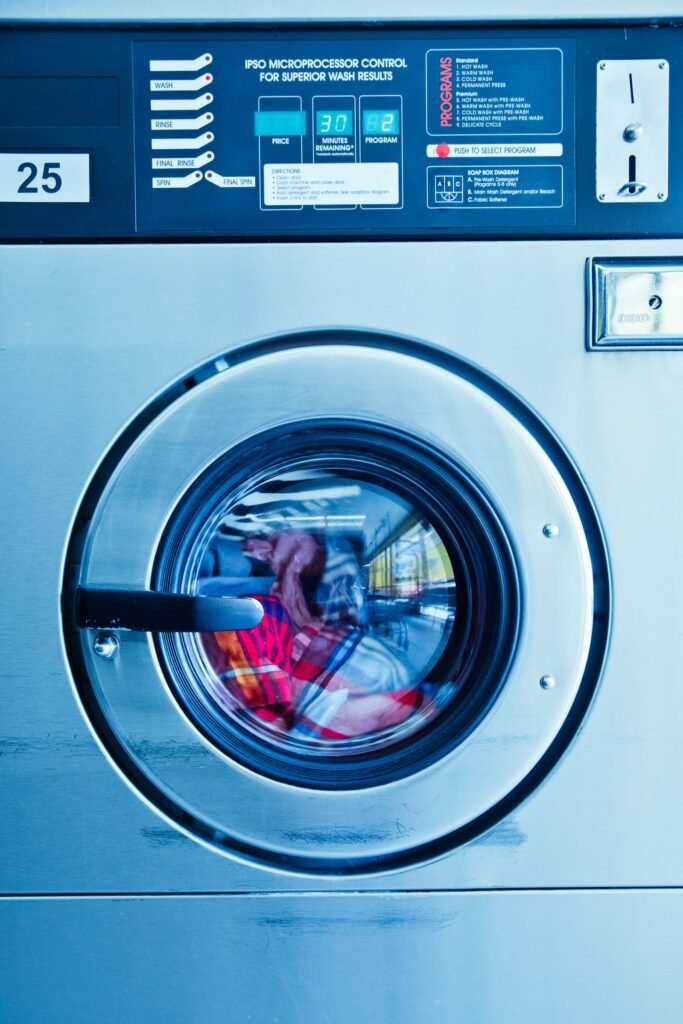
Front-loaders come in different capacities. Clothes need room to tumble. Stuffing every gap leaves dirt in folds and wears fabric faster. For a doona or heavy blankets, use the largest washer on the floor rather than splitting across two medium drums.
As a rule, fill the drum about three-quarters full. A packed drum cleans poorly and can throw a large machine off balance mid-cycle. If you’re unsure, open an empty machine and eyeball your bag against the drum before you pay.
| Machine | Rough capacity | Good for |
|---|---|---|
| Small front-loader | 7–8 kg | A few days of clothes |
| Medium | 10–14 kg | A family load or mixed basket |
| Large | 18–25 kg | Doonas, blankets, sleeping bags |
Step 2: Load, pay, wash and dry
Place clothes loosely in the drum. Follow the pack for dose size. More soap doesn’t mean cleaner clothes; it leaves residue that needs a re-rinse. High-efficiency laundromat machines need less product than old top-loaders at home. Liquid or pods travel easier than a box of powder. If the vending machine only stocks scented sachets and you’ve got sensitive skin, use what you brought.
Insert coins, tap your card or follow on-screen prompts. Note the remaining time so you can return before the wash finishes. Leaving wet clothes sitting annoys the next customer and can smell musty by the time you get back. If dryers use a different payment system from washers, sort that out before you start three machines with only coins left. More detail: laundromat card payment and coin vs card.
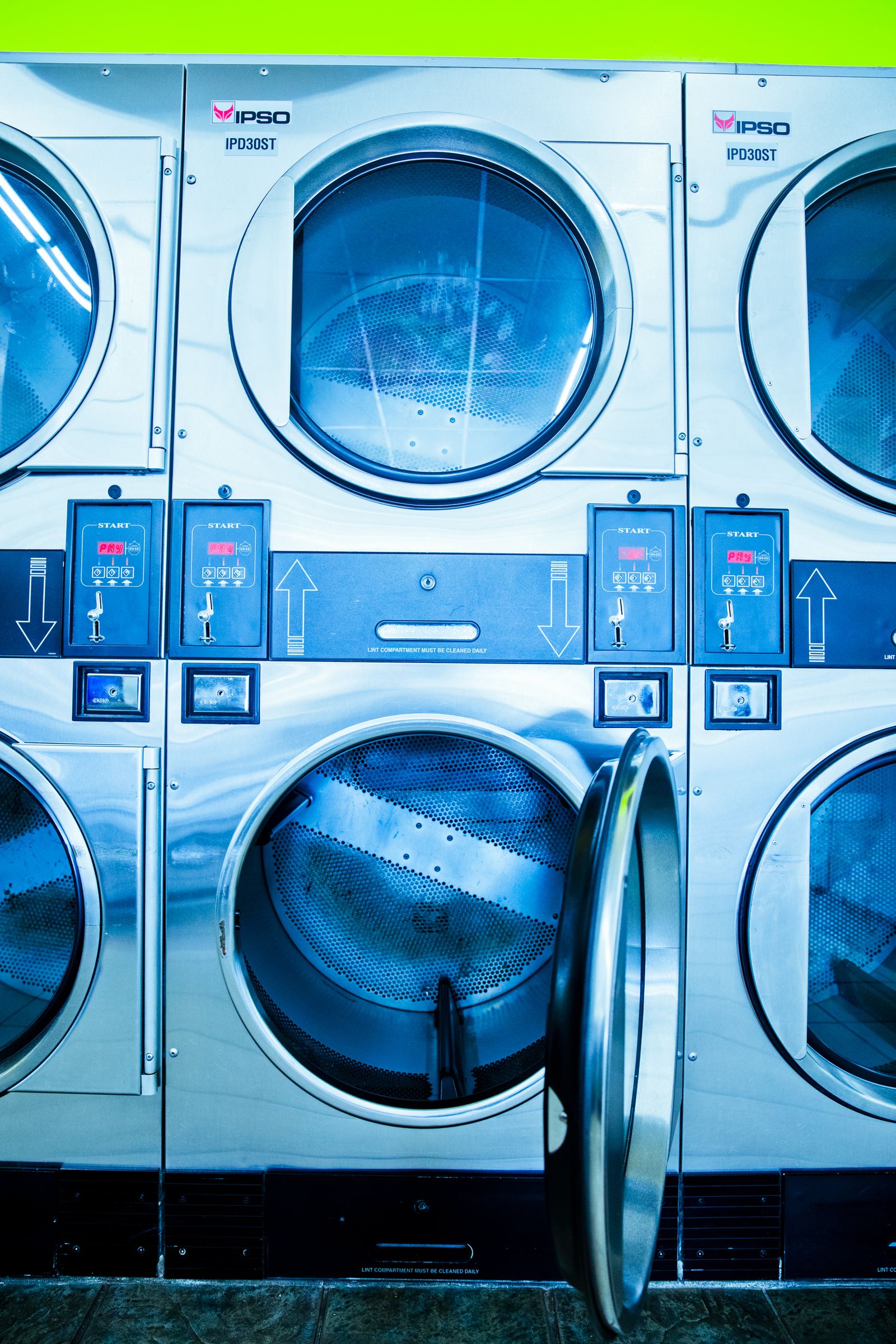
When the wash ends, shake items out so they dry evenly. Don’t cram the dryer. Damp patches mean you need more time or a lighter load. Clean the lint filter if the previous user left it full. That takes ten seconds and cuts fire risk plus drying time.
Thick bedding can need a second dryer cycle, so budget for that before you walk to the car. Fold at the table if one is free, then bag dry clothes promptly. Leaving a finished load unattended for a long stretch is risky in busy sites.
How long a typical visit takes
Plan for roughly 60–90 minutes end to end. A wash cycle is usually 25–40 minutes and a dryer cycle 30–45 minutes, plus folding. If you run two or three machines at once you can clear a week of washing in about the same window. That’s the main reason people choose a laundromat over a small home machine.
So if you’re travelling or between homes, one solid visit often beats three nights of sink washing. Bring a charger or a book for the dryer wait. See travel laundry in Australia if you’re on the road.
Common mistakes, hygiene and cost
First-timers usually trip on the same issues: a washer that’s too small, a red sock in the whites, no coins on a coin-only site, walking away during the dryer cycle, or overloading detergent until clothes feel soapy. Check payment on the listing before you leave home, and stay nearby through the dry cycle.
Most Australian laundromats are cleaned regularly, but machines are shared. Wipe the drum rim if it looks dusty. Pick another washer if the door seal is slimy or smells mouldy. Always clean the lint filter before you dry. High heat in the dryer helps on everyday fabrics. For bed bugs, use hot wash and hot dry; don’t rely on a cold wash alone. Full checklist: are laundromats clean?
A single visit commonly costs roughly $6–$14 for wash and dry combined, depending on machine size and suburb. Large bedding runs higher. That can beat home washing when you need a big drum, have no dryer, or you’re on the road. Compare bands in laundromat cost Australia and is a laundromat cheaper than home washing. Shortlist shops on our location directory, or start with laundromat near me and self-service laundry near me.
Frequently Asked Questions
Do I need my own detergent?
Many sites sell single-use boxes, but bringing your own saves money and suits sensitive skin. Check the listing for vending machines.
Can I wash a doona at a laundromat?
Yes, if the site has a large-capacity washer (commonly 18 kg or more). Use the largest drum available and allow extra dryer time.
Are laundromats safe for clothes hygiene?
Shared machines are fine for everyday laundry when you use normal detergent and a hot dry cycle. See are laundromats clean? for detail.
Is it cheaper than home washing?
It can be, especially for large loads or when you lack a dryer. Compare typical visit costs with your home electricity and water rates.
Related guides
- Laundry service near me
- Laundromat near me
- Wash and fold near me
- Laundromat cost Australia
- Find laundromats by suburb
By Laundry Services Near Me Team · Last updated: June 2026 · About · Find laundromats
Sources: See also www.energy.gov.au for Australian energy and appliance efficiency guidance.
Need a local listing?
Browse verified businesses in our directory or read more guides on the blog.
Find laundromats All guides